You may not notice it at first.
Your ponytail feels slightly smaller. Your hair doesn’t hold volume the way it once did. The parting you’ve had for years suddenly looks a little wider under certain lighting. Nothing dramatic, just different.
For many women between the ages of 30 and 55, hair thinning begins this quietly. Because the changes happen gradually, they’re often attributed to stress, hormones, or simply getting older, and rarely investigated further.
It’s also common to focus on treating what’s visible — trying new products, supplements, or styling techniques — without fully understanding what stage of hair thinning may be developing beneath the surface.
But hair thinning isn’t a single moment. It’s a process. And understanding that process is often the first step toward supporting long-term hair health.
What Causes Hair Thinning in Women?
While every woman’s experience is unique, hair thinning is often influenced by a combination of factors rather than a single cause.
Hormonal changes are one of the most common triggers, particularly during pregnancy, postpartum recovery, perimenopause, and menopause. Shifts in hormone levels can disrupt the natural hair growth cycle, causing hair to shed more easily or grow back finer over time.
Genetics may also affect how sensitive hair follicles are to hormonal changes, gradually leading to follicle miniaturisation.
Other contributing factors can include:
- scalp inflammation, which interferes with healthy follicle function
- reduced circulation, limiting oxygen and nutrient delivery
- nutritional deficiencies, especially iron and vitamin D
- chronic stress, which may push hair into a resting phase too early
Often, hair thinning reflects what is happening internally as much as externally.
Early Signs
Many women first notice that their hair simply doesn’t behave the way it used to — styles fall flatter, volume disappears more quickly, or hair feels lighter when tied back.
Common early signs include:
- a wider or more noticeable part line
- a thinner-feeling ponytail
- more hair shedding in the shower or on brushes
- slower regrowth after trims
- reduced volume when styling
These subtle shifts are important. They often appear long before significant hair loss becomes obvious.
Stages of Hair Thinning
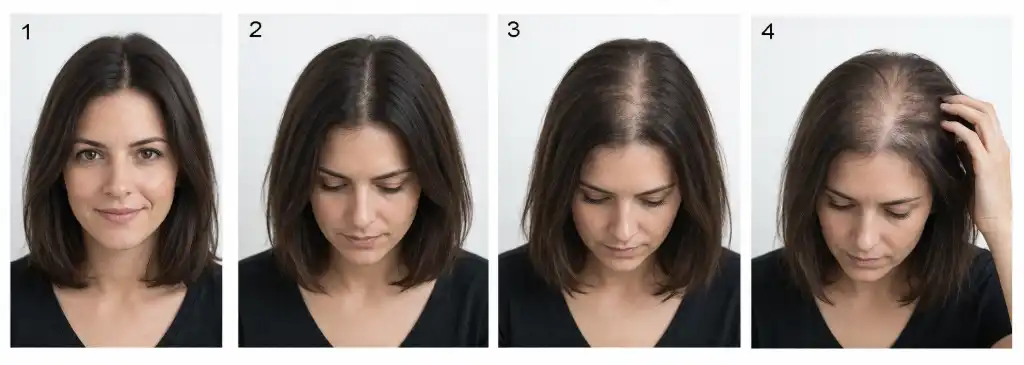 Stage 1 — Early Change
Hair strands begin to grow finer, although overall density still looks normal. Many women notice changes in texture before they see visible thinning.
Stage 2 — Active Thinning
Shedding increases and overall volume starts to decrease. Hair may feel harder to style or maintain fullness.
Stage 3 — Visible Scalp
The part line becomes wider, and areas of reduced density are easier to see, especially under bright lighting.
Stage 4 — Advanced Thinning
Hair follicles shrink significantly and regrowth slows. Hair appears finer, and overall coverage becomes more limited.
Recognising these stages early allows for more targeted and effective support.
How Does Scalp Analysis Help Diagnose Hair Loss?
Scalp analysis is a diagnostic method used by trichologists to examine the scalp and hair follicles under magnification. Rather than relying on assumptions, scalp analysis provides a clearer picture of what is happening beneath the surface.
It helps identify:
- follicle density
- hair shaft thickness
- scalp inflammation
- circulation patterns
- the current stage of hair thinning
This deeper understanding allows care plans to be based on real biological insight rather than trends or trial and error.
When Should You See a Trichologist?
If you notice gradual thinning, increased shedding, or a widening part line, consulting a trichologist can help clarify both the cause and stage of hair changes. Early assessment often leads to more effective support and better long-term outcomes.
It may be time to check your scalp if you notice:
- persistent or excessive shedding
- visible scalp areas
- a noticeably thinner ponytail
- a family history of hair thinning
In clinical trichology practice, scalp analysis often becomes the turning point for many women — shifting the conversation from guessing why hair is changing to understanding what the follicles are actually experiencing.
The Takeaway
Hair thinning in women rarely happens overnight. More often, it unfolds gradually, shaped by hormonal changes, genetics, scalp health, and everyday lifestyle factors.
Recognising early signs and understanding the stage of thinning allows women to respond with intention rather than urgency. With the right insight, hair care becomes less about reacting to change and more about supporting the biology of healthy growth over time.
Because healthy hair is rarely about a single product or quick solution. It’s about understanding the signals your body provides and learning how to support them before small changes become larger concerns.
Sometimes, the most powerful step isn’t treatment, but understanding.
If you’re noticing changes in your hair and want a clearer understanding of what may be influencing it, a more detailed look at your body’s internal balance can be a helpful next step.
The Cell Wellbeing Test offers a personalized insight into nutritional imbalances, sensitivities, and areas your body may need additional support, helping to connect what you’re experiencing externally with what’s happening internally.
Available as an at-home kit or in-clinic assessment, it provides a tailored report designed to support more informed, individualized decisions around your hair and overall well-being.
You can learn more about the test by going to the Clinical Services page.